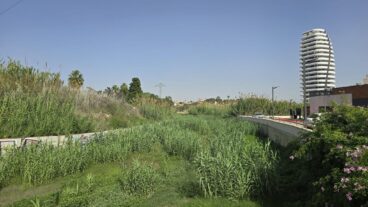
Benissa City Council, through the public company Benissa Impuls, a department headed by José Vicente Ferrer Ginestar, in collaboration with the Department of the Environment, headed by Celia Àusias Tent, has launched an urgent pine felling plan, which began last May in the Cantalar municipal green zone, from Llobella Cove to Advocat Cove. The initiative is in response to the proliferation of Tomicus, a wood-boring insect that, motivated by water stress resulting from the prolonged drought, is causing the weakening and drying of numerous pine trees in the region.
As explained by the mayor, Arthur PocketThe situation has forced the city council to act immediately, given that the infestation "is affecting many areas, not only municipal but also private." The decision, although not included in the initial budget, has been described as "necessary" and "a priority."

In this first phase, which will be carried out before the summer of 2025, work will be carried out in two key areas: the section between Cala Llobella and Cala Advocat, and the Fanadix area. The work includes the felling and manual removal of dead pines, the preservation of native noble scrub (lentiscle, aladierno, and wild olive), and the controlled removal of dead trees that pose a danger. Some large, non-dangerous dead pines, which perform an essential ecological function, will also be left standing.
Selective logging and preventive measures
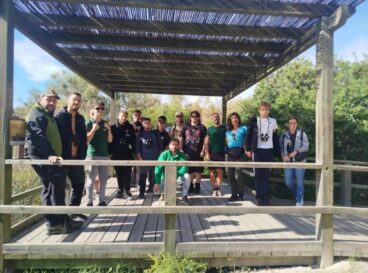
The plan includes the removal of already dry or severely affected pines, with the goal of "preventing Tomicus from affecting pines that are currently in good condition and healthy." It also aims to "avoid potential fire risks during the summer" and address a "safety issue" for users of the area, especially the Ecological Walkway, where "dry branches can pose a danger," Poquet explained.

Starting in the second half of 2025, a second phase is planned that will include the planting of native species of high ecological value such as wild olive, carob, and strawberry trees. In addition, selective pruning will be carried out, eliminating pyrophytic species such as Furze o cistus, and thinning of pine forests to improve structural biodiversity and reduce the risk of fires.
Technical collaboration and vision for the future
The project is supported by botanical biologist and technical specialist Jaume Soler, who previously participated in the design of the award-winning Benissa Ecological Walkway. His experience is considered key to ensuring an effective and respectful approach to the local ecosystem.

Beyond the urgency, this initiative proposes a strategic reflection: "What type of trees does this area require in the future?" according to Soler. The expert emphasizes that "throughout our Valencian territory, many trees are currently in some form of distress," so it is necessary for "all administrations to reflect and focus on what type of trees are most appropriate."

According to the botanical biologist, work was carried out on the Ecological Walkway between 2006 and 2011. In 2021, work was carried out on the current green area, and approximately 185 trees were removed. This time, with the first round of work, approximately 80 pine trees were removed.
The intervention follows the principles of modern forest management based on habitat-based treatment, adapted to the ecological dynamics of the Mediterranean region. According to the technicians, "this model allows for cost reduction, increased ecosystem resilience, and long-term planning." The planned measures include pruning pine trees to two meters to prevent the vertical continuity of fuel, maintaining trees of ecological value, and controlling the uncontrolled growth of invasive species.
"The future lies in trying to analyze how to proceed in each location; there's no magic formula that works for everyone. It depends on the type of soil and the amount of surface area," among other things, "and determining what undergrowth to leave, what type of forest would be ideal for each location, and acting accordingly," Soler indicated.

As a complementary measure, the following will be managed: waste Forestry operations will be carried out with efficiency and sustainability in mind. Plant material will be removed using clamshell trucks or shredded on-site whenever possible. This phased planning will reduce the ecological impact and optimize public resources in future projects.
The expert's explanations focus on raising awareness about the need for management "so that what surrounds humans, such as invasive plants or excess wood, doesn't gain ground, because we must always keep in mind that practically everything is already anthropized."
Institutional call and next steps
From Benissa, we are calling on the various administrations to help municipalities combat this plague that is affecting the area. "This is one of the first actions we will take in municipal green areas, but there will be more because the plague is affecting many areas, both municipal and private," Poquet explained.

The project in El Cantalar will be "the first of many," in the words of the mayor himself, and will lay the foundation for more sustainable forest management. In this way, the council emphasizes the need to strengthen public awareness, as the problem also affects private lands, and calls for more investment in research and prevention against the effects of climate change.