The Marina Alta Regional Association (MACMA) has completed the first draft of its Non-Motorized Mobility Plan for the region, a project valued at 12,3 millones de euros which proposes to structure the Marina Alta with 77 new sectionsWith the aim of gathering contributions, suggestions and improvements, MACMA has organized a series of talks informative and debate programs during the month of October in Calp, Orba, Jesús Pobre and Pego, where the technical team will present the regional network designed to the public.
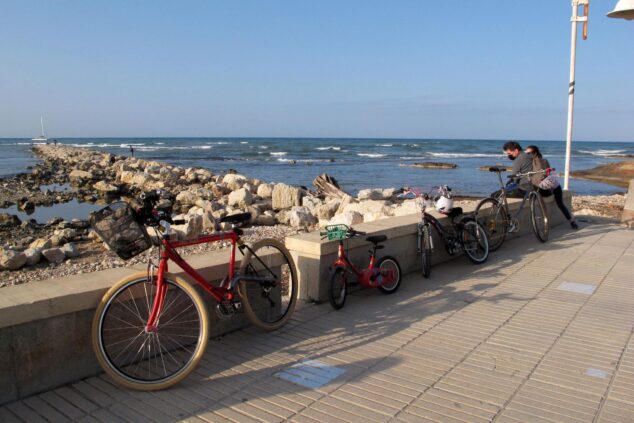
"The Navy is moving: Come, listen, ask and participate" campaign
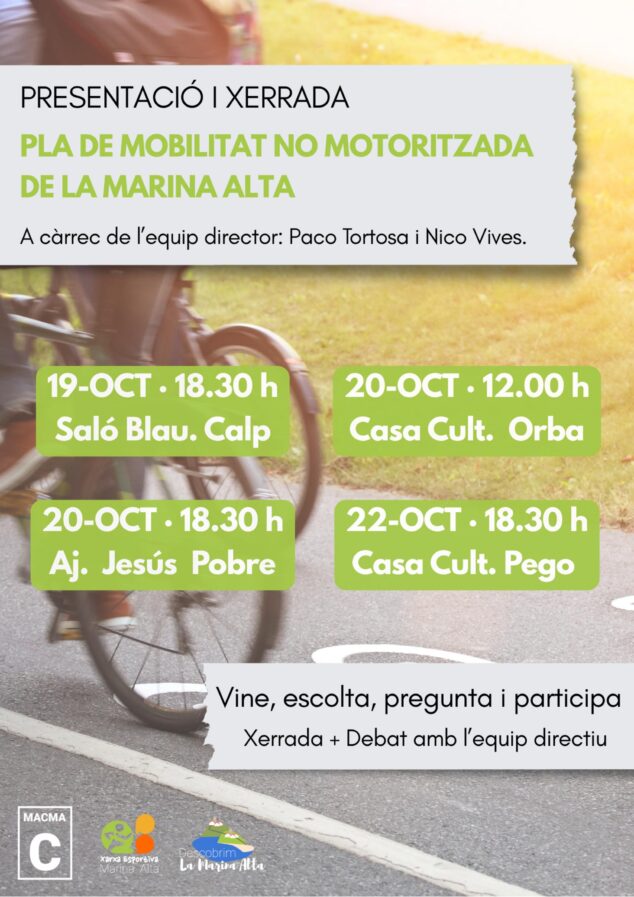
Under the slogan "La Marina is moving: Come, listen, ask questions and participate," these sessions will be led by the plan's management team, made up of geographers and mobility specialists Paco Tortosa Pastor and Nico Vives Riera, as well as the Mancomunitat's technical representatives, Núria Gómez Bolufer and Rodrigo Cano Colino. The aim is to present the network proposal, answer questions, and open a direct debate with residents. associations and municipal representatives to incorporate their feedback.
A diagnosis based on the regional reality
This first draft has been prepared based on a comprehensive inventory of resources, participatory meetings with key stakeholders, held at the end of 2025and from the analysis of citizen surveys of residents throughout the region, which reveal:
- High vehicle availability: El 78,1 % most of the participants have a bicycle, mainly a touring bike (49,6 %) and mountain/MTB (42,3 %).
- An urgent need for a secure connection: El 82,9 % Many of those surveyed identified the lack of adequate infrastructure to connect the towns of the Marina Alta region as the main barrier to mobility. Furthermore, 68,2 % expresses insecurity due to motorized traffic.
- Intercity connection claim: El 87,1 % Citizens are calling for priority interconnection of urban centers with each other, as well as educational, health, and sports centers (69,7 %) and public transport stations or stops (53,8 %).
Schedule and locations of the presentation talks
The technical team will present the maps and the proposed sections at four strategic points in the region to facilitate the attendance of residents from all sub-regions:
- Calps: Monday October 19at 18:30h — Saló Blau.
- Orba: Tuesday October 20at 12:00h — House of Culture.
- Jesus Pobre: Tuesday October 20at 18:30h — Plenary Room of the Town Hall.
- Pego: Thursday October 22at 18:30h — House of Culture.
Actions of the Plan: 12,3 million to transform regional mobility
The document prepared by the technical team goes beyond defining roads and contemplates a comprehensive deployment of infrastructure, services, and technology with an estimated total investment of 12.351.795,10 EurosThe main actions and areas of work recorded in the draft include:
- Network of 77 sections and 390,4 km of non-motorized roads: The proposed project involves a central connection between the coast and the interior, taking advantage of the network of traditional rural paths, irrigation ditches, and low-traffic roads that have been pedestrianized.
- Resolution of problem areas and unique projects: The plan includes high-priority interventions such as construction of a new footbridge for cyclists and pedestrians over the N-332 road between Pedreguer and Jesús Pobre.
- Integration into the EuroVelo 8 European network: The document proposes the creation of a regional branch of the EuroVelo 8 Mediterranean route that will run from north to south through the Marina Alta (from the Molinell River in Pego/Déniacrossing the coastline towards Xàbia, the Poble Nou of Benitatxell, Moraira and Calp).
- Parking lots payments automated (BikeBox) and 980 total spaces: Automated, high-security enclosed modules at high-intermodality points such as 6 main TRAM stations (Dénia, La Xara, Gata, Teulada, Benissa and Calp – 120 places), the La Xara Regional Hospital (40 places) and the Ondara Shopping Centre (40 places). In addition, they will be distributed 400 inverted U-shaped steel arches throughout the municipalities of MACMA.
- 35 multi-function electric charging and self-repair points: Distributed at strategic points throughout the region, they will have basic maintenance tools and free chargers for Bike electrical.
- Development of a regional mobile application (GPS App): A dedicated app that will offer live GPS navigation over the network, location of charging points, workshops mechanics, points of interest, etc.
Designing the network of the future together
Paco Tortosa, from the management team, emphasizes that "This project is probably one of the most important that can currently be carried out in the Marina Alta region to transform the mobility model based on private vehicles. We are in a context where climate change and energy crises are accelerating, with fuel prices at record highs. Therefore, this network is not just an alternative, but a fundamental part of the solution for the future, sustainability, and environment of the region."
For their part, the MACMA technical team, made up of Rodrigo and Núria, points out: “We don’t want to present a finalized document, but rather a rigorous initial technical proposal on paper so that the people of the region can review it, discuss it, and help us refine it. The opinions of those who travel these roads daily are essential to achieving a truly useful and functional plan.”
Finally, from the presidency, Sergi Ferrus Peris insists on inviting all citizens, cycling groups, neighborhood associations, businesses, and the educational community to attend these talks and join the discussion. For him, "this is the first step in a medium- to long-term project that could incorporate other forms of public transportation, and why not? Establish a regular, intermodal connection between bicycles, electric buses, and the existing train stations in our region—a long-standing demand to finally achieve the intra-regional connectivity we deserve."